



Color is often the first thing people think about when imagining a beautiful interior. But in the most sophisticated spaces — the ones curated like modern galleries, the ones that feel calm, timeless and emotionally rich — it is texture, not color, that carries the true weight of the room.
Texture is the language of depth. It is what gives an interior its emotional temperature. A neutral palette without texture feels flat; the same palette enriched with raw wool, sculpted biocomposite, charred wood or mineral surfaces becomes warm, poetic and architectural. Texture makes the room feel lived in, even when the palette is spare.
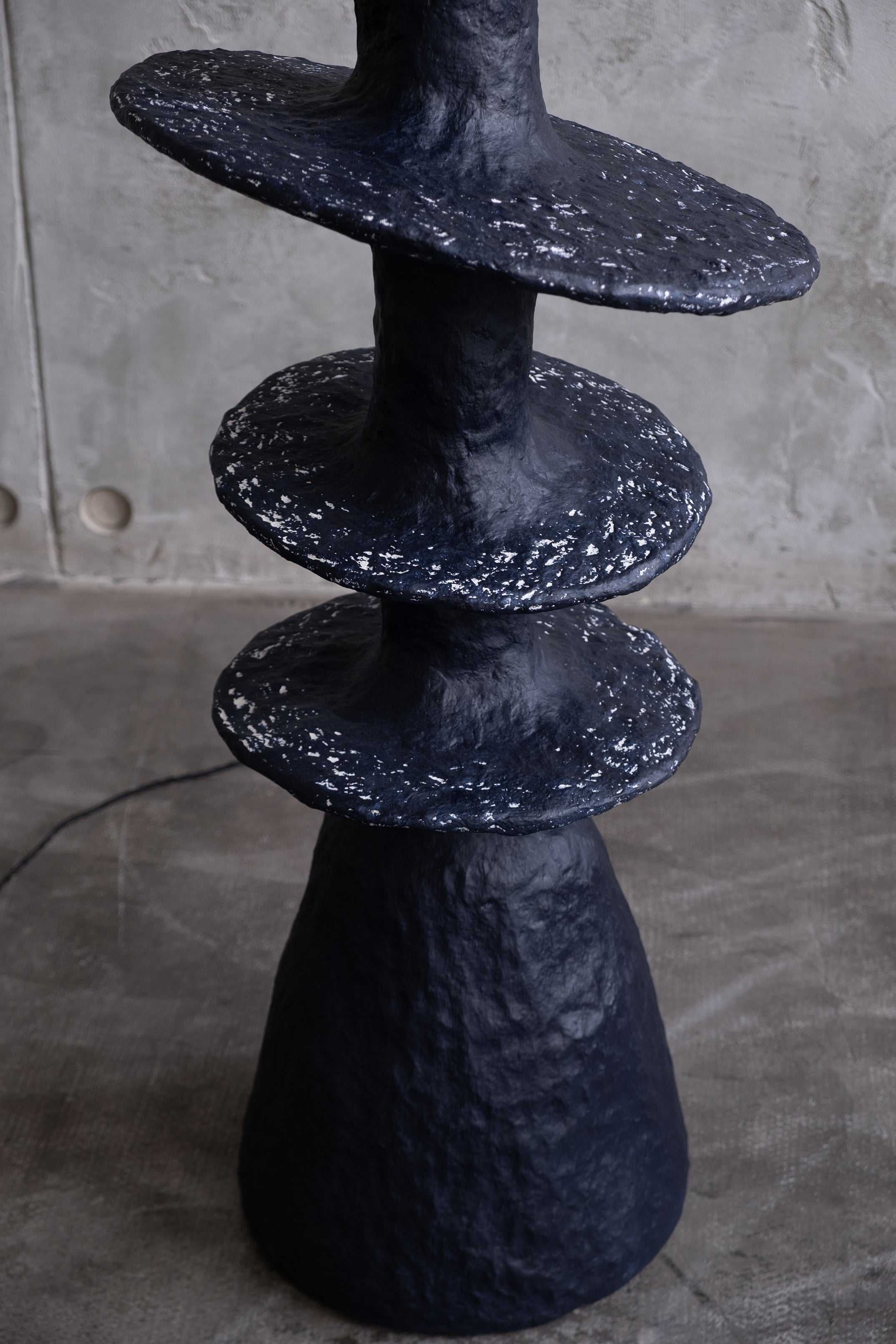
In contemporary spaces influenced by Galerie Philia or Carpenters Workshop Gallery, surfaces are rarely smooth for the sake of smoothness. They are tactile, deliberate, imperfect. A floor lamp with a wool lampshade or a raw, sculptural base introduces a sensory quality that cannot be replicated through color alone. It changes how light moves, how shadows fall, how the room breathes.
Color communicates quickly; texture communicates deeply.
Color catches the eye; texture holds it.
Color decorates; texture defines.
Soft materials such as wool diffuse light into gentle halos. Stone-like biocomposite bases ground the space with seriousness. Charred wood adds a smoky, architectural character. These textures don’t just complement the room — they stabilize it. They bring quiet resonance. They add emotional weight.
Designers who work in organic modern and contemporary calm interiors know that when color fades, texture remains. A sculptural lamp in a neutral palette becomes a focal point precisely because of its surface — the way it absorbs light, the way it invites touch, the way it interacts with the rest of the space.
Texture also brings longevity. While colors fall in and out of trend cycles, natural textures stay relevant for decades. A lamp with a wool shade or sculptural raw base will always feel honest, human and timeless. This is why collectible lighting has moved into the realm of functional art — the textures are emotionally intelligent, not manufactured.
A well-textured object does not need color to make a statement.
It needs presence.
It needs authenticity.
It needs material with a soul.
And that is why, in truly refined interiors, texture matters more than color — it builds the emotional architecture of the room.


