



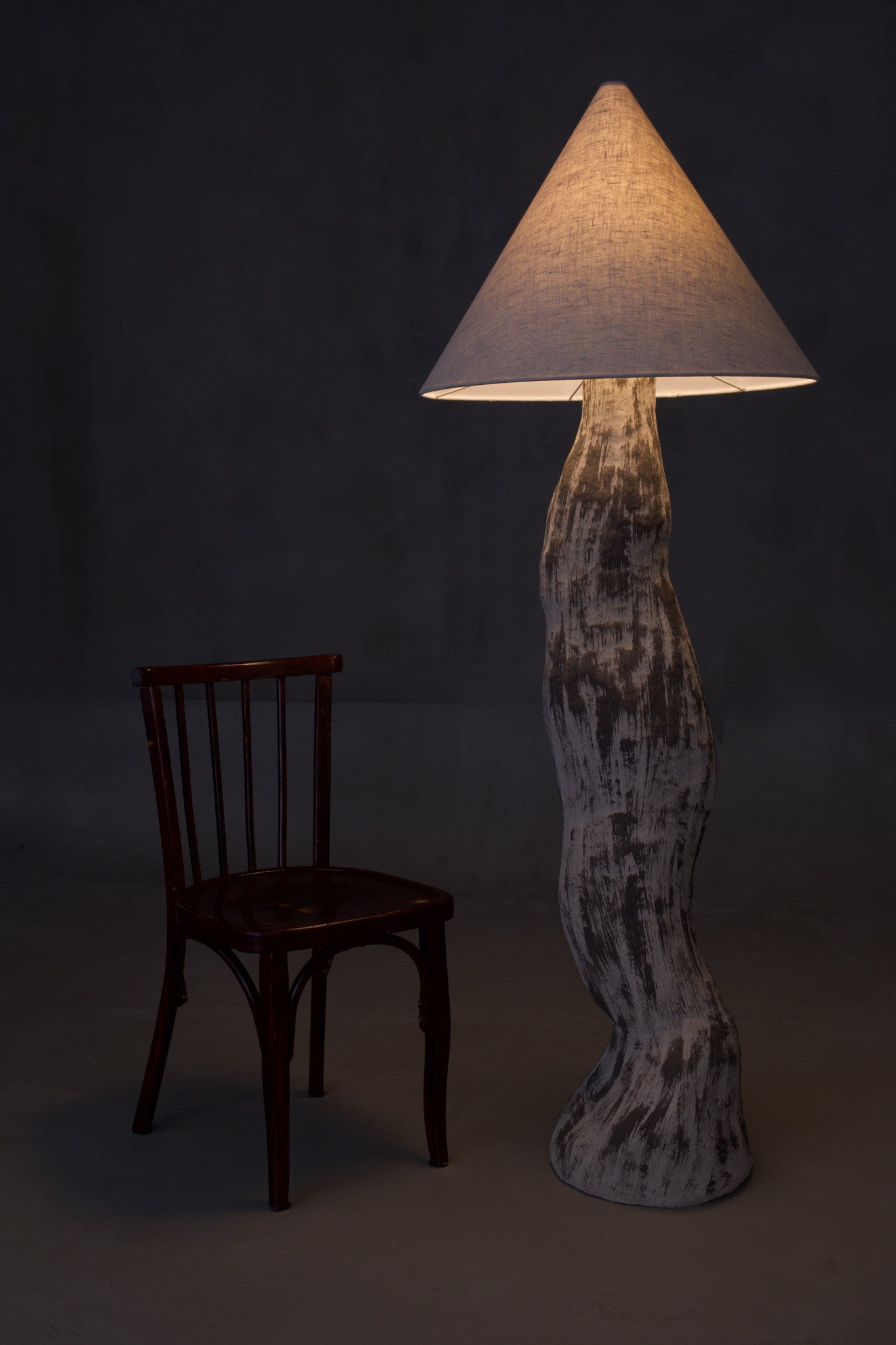
In traditional product design, material was often treated as something secondary — a technical choice hidden beneath finish, color, or style. But in the world of functional art and collectible furniture, material is the first language. It is the part of the object that speaks before form, function, or even context.
When we touch a sculptural lamp made of clay and hemp fiber, when we run our hand across a burned oak base, when we feel the softness of untreated wool — we are not just interacting with an object. We are decoding meaning.
The future of design is not defined by surface beauty.
It is defined by material honesty, emotional tactility, and sensory memory.
Why Texture Matters More Than Shape
A shape can impress us.
Texture can move us.
The surface of an object creates an emotional reaction before the mind understands what the object is. Texture can signal age, fragility, weight, warmth, or silence — and it can do so instantly.
Smooth = industrial, predictable, polished
Rough = human, raw, grounded
Matte = calm, contemplative
Glossy = decorative, artificial
Fibrous = organic, tactile, alive
Stone-like = strong, monumental, rooted
In other words: Texture creates the psychology of the room.
The Rise of Tactile Materials in U.S. Interiors
More designers, collectors, and architects in Los Angeles, Brooklyn, and Austin are shifting away from synthetic “perfect” finishes and embracing materials that feel untouched, unfiltered, unpolished.
These materials are now shaping collectible design:
biocomposite surfaces that mimic stone or earth
charred wood with burned pores and heat lines
clay and mineral blends that hold fingerprints
hand-spun undyed wool in lighting and furniture
raw lime plaster used as sculptural texture
hemp fiber and cellulose used as structural form
They are not chosen because they are “eco.”
They are chosen because they are alive.
Material as Identity in Functional Art
Just as a painter is known by their brushstroke, a collectible design studio is known by its surface language.
PletoStudio is recognized by its biocomposite texture — a stone-like matte surface made from clay, wood shavings, cellulose, and hemp fiber.
Faina is recognized by its sandy earth-like plaster.
Arno Declercq is known for burned oak and dark steel patinas.
Bower Studios is known for liquid reflective geometry.
The material becomes a signature — a way to instantly know who made the object.
Why Unconventional Materials Increase Object Value
Collectors do not pay for rarity of design alone — they pay for rarity of process.
An object that cannot be mass-replicated holds cultural value.
A material that requires time, drying, shaping, hand-finishing becomes a timestamp.
A surface that will age — rather than peel — becomes an heirloom.
This is why the collectible market now favors:
matte over glossy
organic over synthetic
hand-built over molded
slow-made over mass-produced
Material is no longer just what the object is made from.
It is what the object communicates.
The Emotional Psychology of Surface
Research in spatial behavior studies shows that people feel calmer in rooms with matte, organic surfaces — and more alert or tense in glossy, machine-finished ones.
Rough textures stimulate grounding and presence.
Soft textures stimulate safety and intimacy.
Natural textures reduce psychological distance between human and space.
This is why gallery-style interiors feel silent and spacious:
They are built not from color, but from tactile contrast.
The Future: Design That Speaks Before It Is Understood
As industrial design becomes more digital and virtual, the physical world answers back with rawness, weight, and tactility.
We no longer want objects that feel “finished.”
We want objects that feel true.
Objects that make us slow down.
Objects that feel made, not produced.
Objects that let us feel the world — not escape it.
Material is not background.
Material is message.


