



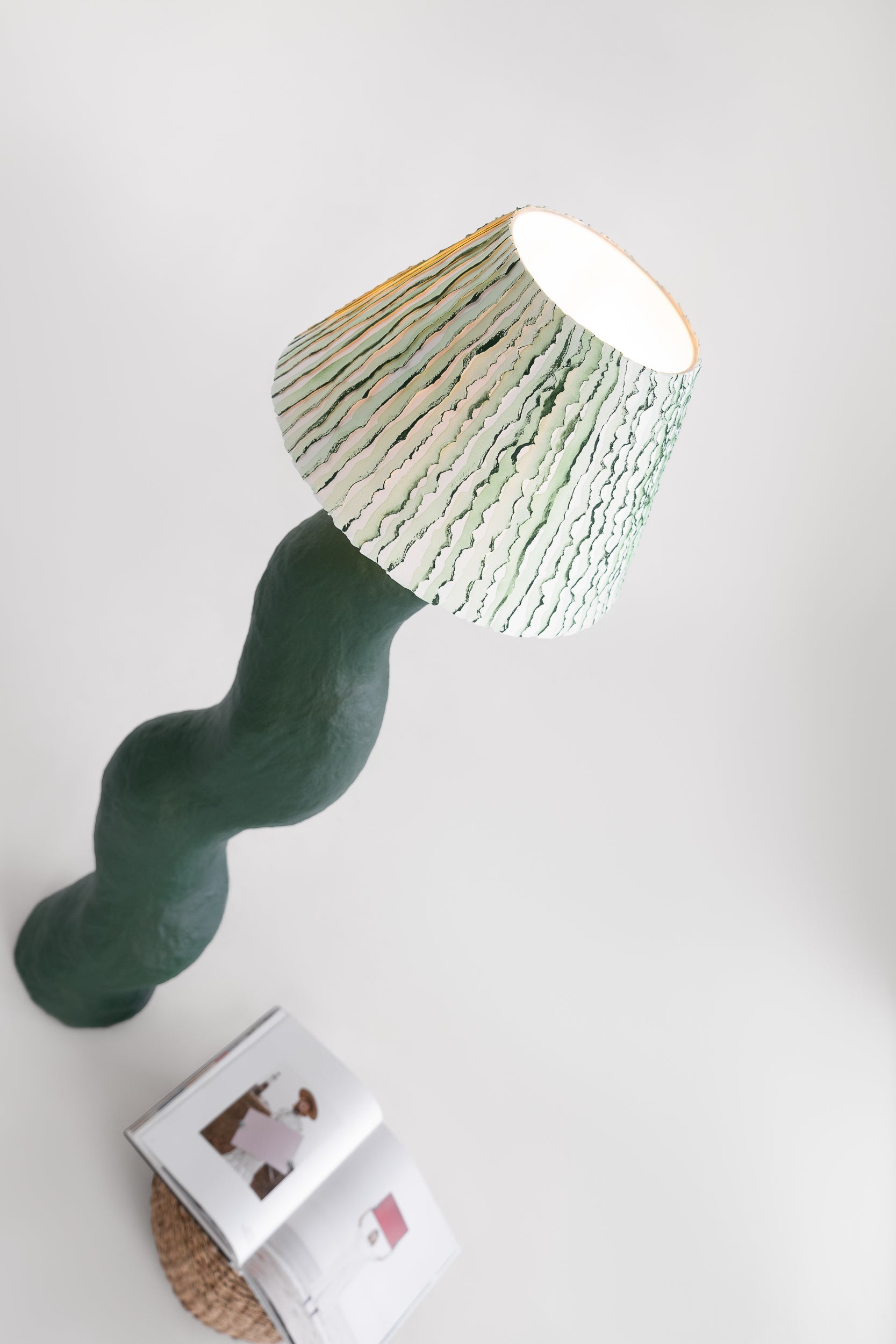
Luxury once meant scale, polished showrooms, and recognizable names.
A “designer home” meant Restoration Hardware, Roche Bobois, Minotti, Cassina, Ligne Roset.
The formula was simple: neutral palette, expensive materials, brand prestige, flawless finish.
But in 2025, that formula has lost its power.
Because luxury became predictable.
Every penthouse looks the same.
Every luxury rental looks the same.
Every hotel lobby looks the same.
Meanwhile, cultural value has shifted to something else entirely —
not brand luxury, but studio authorship, tactile honesty, and emotional rarity.
✅ What Killed Luxury Retail
It wasn’t recession — wealthy buyers still spend.
It was taste evolution:
Generic “luxury styling” became visual wallpaper
Mass-produced premium items lost uniqueness
Designers and collectors want identity, not recognition
Young HNW buyers don’t worship brands — they worship intention
Sustainability exposed the emptiness of industrial gloss
Custom-built studio objects outperform 50-showroom “high-end decor”
If everyone can buy it, it stops being luxury.
✅ What Replaced It: The Studio-Made Economy
Instead of brands, buyers now go to makers.
Instead of 100-option catalogs, they want one-of-one forms.
Instead of “finishes,” they want process — raw clay, charred oak, plaster, stone dust, textile wrap, biocomposite texture.
Studio-made objects offer what retail never can:
Visible hand
Edition scarcity
Material truth
Narrative identity
Emotional presence
Ability to customize
Direct conversation with the maker
Resale and archival value
In the new model, buying is not transactional — it is curatorial.
✅ Who Is Driving the Shift
architects designing gallery-style homes
high-end interior designers who refuse to specify retail
collectors entering design through lighting & objects
young buyers (28–45) who reject logo status culture
luxury property developers using sculptural objects to raise value
editors, curators, cultural buyers (not mainstream consumers)
These buyers don’t ask:
“Where is this brand from?”
They ask:
“Who made it — and why does it exist?”
✅ Why Handmade ≠ “Craft Market” Anymore
The old hierarchy was:
handmade = cheap, rustic, hobby
industrial = luxury, modern, professional
That hierarchy has flipped.
The new logic:
handmade = authored, rare, collectible, investment
industrial = repeatable, trend-sensitive, negligible value
A $4,800 sculptural lamp from a studio has more long-term value than a $12,000 catalog chandelier — because one can be replaced, the other cannot.
✅ Proof: Where the Money Is Moving
Design Miami sales reports show a 38% year-over-year increase in collectible lighting.
Phillips and Sotheby’s added design-only auctions due to demand.
Interior designers now request trade access to studios, not brands.
Luxury developers in LA & NYC commission furniture instead of sourcing it.
1stDibs’ fastest-growing category is “studio fresh work,” not vintage resale.
Luxury isn’t vanishing — it’s migrating.
✅ What This Means for Studios Like PletoStudio
You are not competing with retail furniture.
You are replacing it.
Your buyer does not want 40 products to choose from.
They want 4 objects that feel irreplaceable.
You don’t need a catalog store.
You need a narrative, a trade structure, and a clear studio identity.
Handmade is no longer a weakness — it is the business model of the future.


