



Collecting used to begin with paintings, prints, or small sculptures.
But in 2025, the fastest-growing category for first-time design collectors is not fine art —
it’s sculptural lighting.
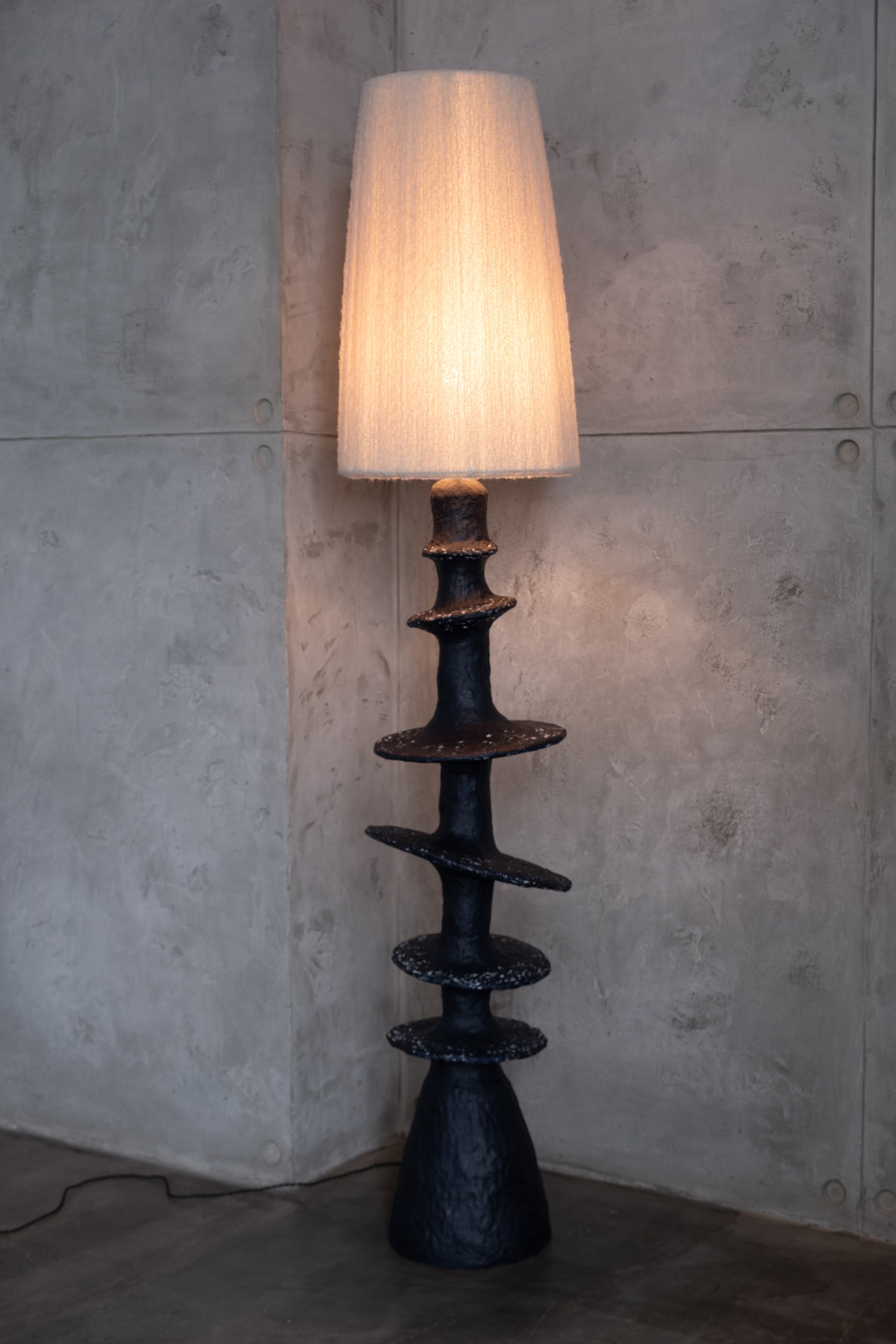
Floor lamps, table lamps, wall lamps, textile-shaded fixtures, mineral or clay-based objects — these pieces are now functioning as the entry door into the collectible market.
And the reason is simple:
Lighting is sculpture with purpose.
Lighting changes the room instantly.
Lighting has presence even when switched off.
Lighting is moveable, scale-friendly, and emotionally charged.
It is the perfect first collectible.
✅ Why Lighting Is the First Object People Collect
Because it checks every cultural box:
It’s functional (so buyers feel justified emotionally and financially)
It’s sculptural (so it activates a space the way art does)
It’s portable (unlike a stone table or built-in shelving)
It works in both small and large homes
It can be editioned or one-of-one, like art
It photographs well (critical for architecture + publication)
It holds resale and auction potential
It allows collectors to “test” a studio before investing more
A chair is furniture.
A lamp is a presence.
✅ The Psychology Behind Lighting Purchases
A buyer may hesitate before spending $8,000 on a table.
But they will spend $3,500 on a sculptural floor lamp that instantly transforms a room.
It feels like a justifiable luxury:
It’s art, but also useful
It’s emotional, but also logical
It’s collectible, but not intimidating
It’s an investment, but not immobilizing
So lighting becomes the first piece in the collection — not the last finishing touch.
✅ How the Market Confirms This Shift
During the last 3 years:
Design Miami reported lighting as the highest-velocity object category
1stDibs saw a 240% increase in “sculptural lighting” search volume
Auction houses moved lighting into stand-alone design categories
Architects began specifying lighting before furniture, not after
Interior designers now use lighting as the “anchor piece” in proposals
Collectors began treating lamps like editioned sculpture (COA, numbering, resale)
Lighting is not décor anymore.
It is a collectible asset class.
✅ Where Collectible Lighting Is Sold Most Actively
Design fairs (Design Miami, PAD London, Salon Art + Design)
Studio-direct private sales (email, Instagram, WhatsApp)
Curated platforms like Galerie Philia, The Future Perfect, Marta
Architect-specified sourcing for private homes
1stDibs Collectors Program (not the public marketplace)
Private collector networks & resale groups
Press-driven exposure (AD, Dezeen, Yellowtrace, Sight Unseen)
Lighting is the only design category that lives comfortably in all acquisition channels — retail, gallery, auction, private collector trade, and architecture.
✅ What Makes a Lamp “Collectible” Instead of “Decorative”
It has a sculptural base or form, not a standard fixture body
It has material identity (clay, charred wood, biocomposite, stone, plaster, textile)
It carries a studio signature (recognizable form language)
It exists in limited editions or one-of-one
It can be documented, shipped, insured, archived
It interacts with shadow, not just light
It feels like an object, not a lighting product
If you can replace it with a catalog lamp — it isn't collectible.
✅ Why This Matters for Studios Like PletoStudio
Because lamps are the easiest point of entry into your world.
You don’t need to convince a buyer to redesign their home.
You need to convince them to place one sculptural object — and feel the room change.
After that, they buy a second piece. Then a third.
This is how collectors are built.
Studio-made lighting is not a niche.
It’s a business model — and a long-term collector strategy.


