



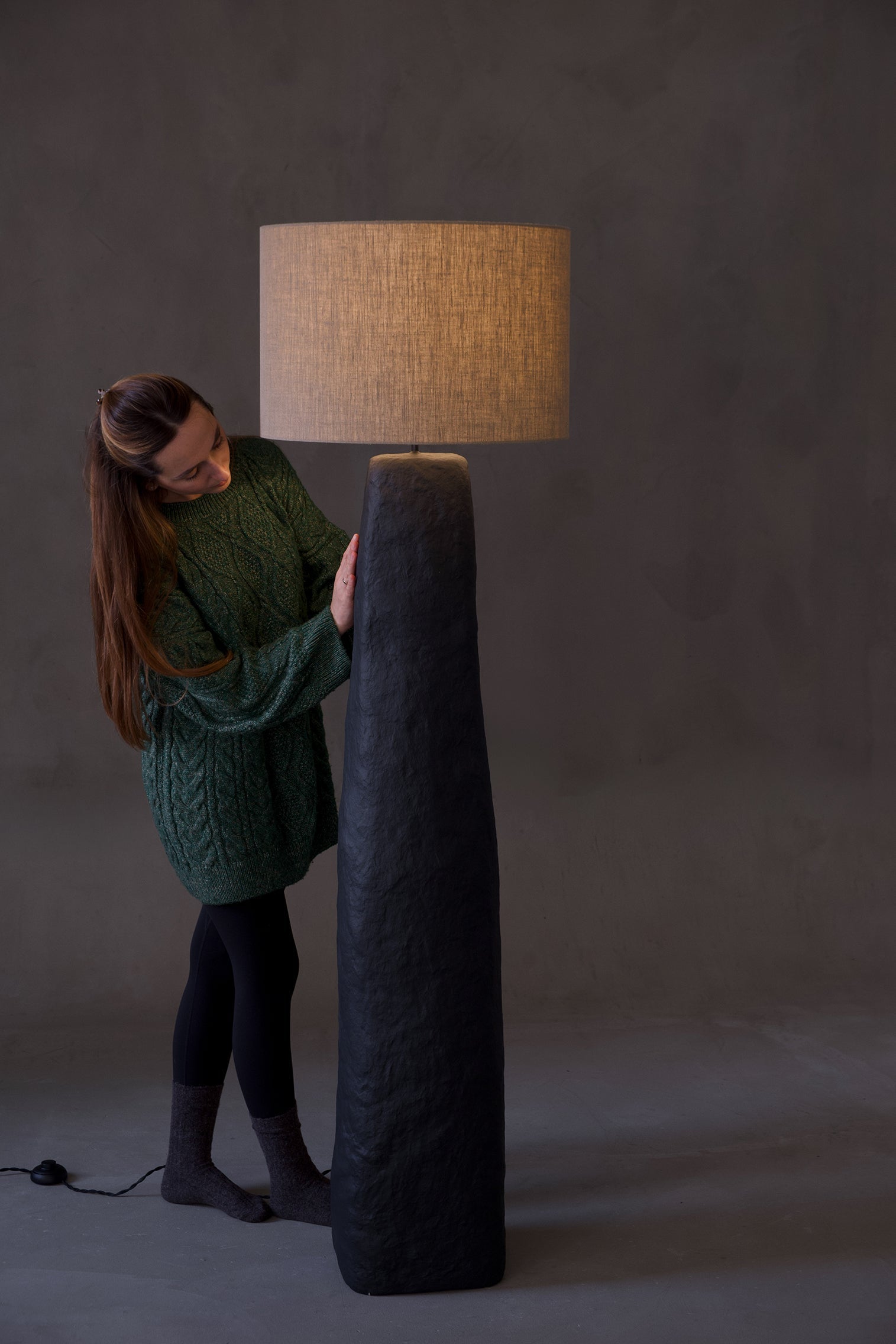
For decades, interior design followed a predictable cycle: trend → mass adoption → replacement. But the era of seasonal aesthetics — from “farmhouse white” to “mid-century modern” — is ending. A new movement is emerging, driven not by decoration, but by intellectual and emotional provocation. This movement is avant-garde design.
Avant-garde interiors do not ask: “Is it practical?”
They ask: “Does it challenge the room?” “Does it expand perception?” “Does it feel alive?”
A sofa can be asymmetrical.
A table can look like a landscape.
A floor lamp can behave like a sculpture.
And in the United States, this shift is no longer niche — it is becoming the dominant language of high-end homes, galleries, and collectible design fairs.
From Aesthetic to Attitude
The word avant-garde originally described radical art movements — Dada, Futurism, Surrealism — but in the 2025 interior world, it refers to objects that do not follow the rules of furniture.
Instead of being “useful first,” avant-garde objects exist as ideas first, function second.
A coffee table that feels like a geological formation
A lamp with a base shaped like folded clay or volcanic stone
A mirror wrapped in textile and tension, not glass-bevel symmetry
People no longer want objects that “blend in.” They want conversation pieces — items that disrupt, question, slow the eye, and activate emotion.
This is why sculptural floor lamps and organic biocomposite tables are growing fast, while flat-pack furniture is collapsing in perceived value.
Why the U.S. Market Is Leading the Shift
There are three cultural forces behind the American awakening to avant-garde interiors:
1. Homes as Curated Identity
American homeowners — especially in New York, Los Angeles, Austin, and Miami — are no longer decorating for status. They are curating for authorship. Their home must look like a point of view, not a Pinterest board.
2. Collectible Design as Cultural Currency
Collectors who once invested only in paintings and sculptures are now acquiring functional art — furniture in limited editions, handmade by studios, shown at fairs such as Design Miami, Salon Art + Design NYC, and Armory Off-Site.
Owning a sculptural lamp or brutalist table is not “taste” — it is positioning.
3. Fatigue with perfect, polished minimalism
The “clean beige” era is dying, because it lacked depth. It was interior design without soul, history, or material truth.
Avant-garde design brings back texture, imperfection, distortion, tension, emotion.
It replaces uniformity with authorship.
The New Language of Materials
In avant-garde interiors, materials are not finishing touches — they are the story.
The rise of sculptural pieces in:
charred wood
raw clay and earth pigments
hemp fiber biocomposites
hand-spun wool bouclé
recycled stone dust blends
ultra-matte plaster textures
…is not a trend. It is a declaration: “This object is not industrial. It is alive.”
Studios like PletoStudio, Faina, and Arno Declercq prove that emotional rawness can replace luxury polish — without losing value.
Where Avant-Garde Design Is Shown and Sold Today
The U.S. has adopted avant-garde furniture faster than Europe not because of tradition, but because of curiosity.
Key hubs:
| City | Influential Spaces |
|---|---|
| New York | Carpenters Workshop Gallery, Friedman Benda, The Future Perfect |
| Los Angeles | Marta Gallery, JF Chen, The Landing |
| Miami | Design Miami, Nina Johnson Gallery |
| Chicago | Volume Gallery, Casati |
These are not décor stores. They are curatorial environments, where a lamp is treated like sculpture, and a table like a monolith.
Who Buys Avant-Garde Furniture in the U.S.?
Not the average home decorator.
Not the mass-market buyer.
The new audience is:
architects designing gallery-homes for clients
collectors who treat furniture as investment assets
interior designers shifting from “styling” to “curation”
young high-net-worth buyers who don’t want Restoration Hardware aesthetics
luxury home builders aligning with art, not trend retail
In other words: people who no longer want “nice.” They want necessary, unforgettable, and culturally relevant.
Why This Matters for the Future of Interior Design
Avant-garde furniture will not replace functional furniture.
But it will replace decorative furniture.
The next decade of interiors will belong to pieces that:
refuse symmetry
expose material truth
blur sculpture and function
activate emotional response
exist in small editions, not mass-production
Your home will not be judged by how finished it looks — but by how authored it feels.
And the designers who understand that shift now will own the future.


