



For years, collectible furniture and functional art were associated with a narrow audience: gallery patrons, seasoned art investors, and high-profile interior clients. But the landscape is changing — fast.
A new collector profile is emerging, especially in the U.S., and it is expanding the market for sculptural lighting, hand-built tables, and one-of-a-kind interior objects.
These buyers are not motivated by trend, status logos, or resale hype.
They’re motivated by meaning, rarity, and authorship.
The question they ask is simple:
“Does this object feel like it could exist nowhere else but here?”
Who Are the New Design Collectors?
Not the stereotypical billionaire art buyer.
Not the mass-market shopper.
The new collector is:
A 30–50 y/o homeowner who values intentional objects over full-room sets
A creative professional (architect, filmmaker, designer, gallery owner)
A tech entrepreneur investing in “emotional architecture” inside the home
A woman-led household prioritizing material honesty and narrative design
A first-time collector choosing one important object over 20 decorative ones
A buyer who tracks designers, not brands
They don’t decorate to impress visitors — they curate to feel connected.
Why They’re Choosing Functional Art Instead of Luxury Retail
Because luxury retail has become predictable.
Because big brands repeat themselves.
Because “premium” no longer means “personal.”
Studio-made, sculptural, small-batch objects offer what mass luxury cannot:
A sense of authorship
A visible human touch
A story embedded in material
A physical presence that changes the room
A future resale and archival value
A collectible lamp or table is not a purchase.
It is a decision — almost a relationship.
What They Collect First (and Why)
The most common entry objects for new collectors:
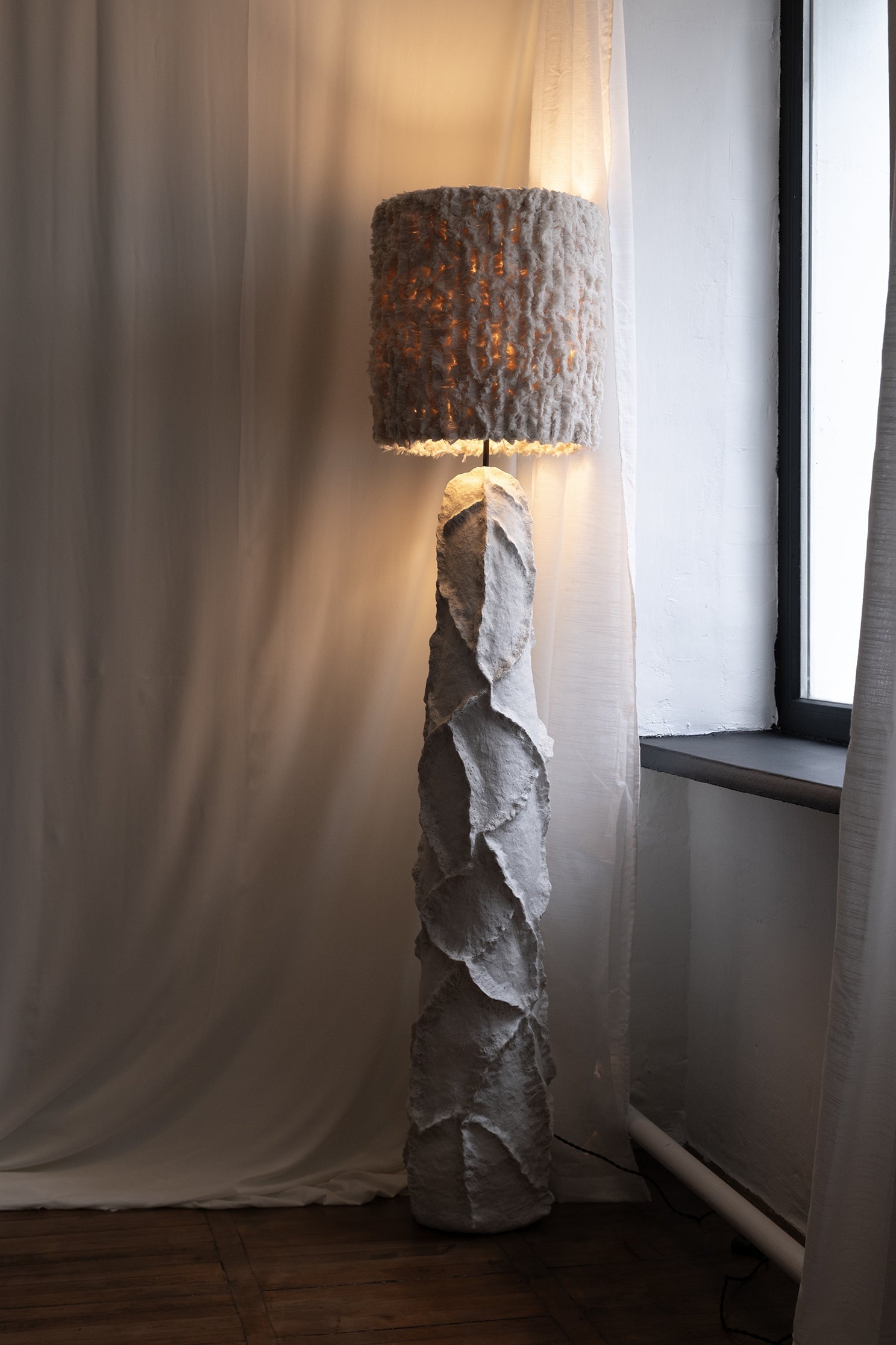
sculptural floor lamps (because they change a room instantly)
table lamps with textile, clay, or matte organic shades
stone-like or biocomposite coffee tables
hand-carved or charred wood pieces
mirrors treated as sculptural frames instead of décor
Lighting is often the first collectible object because it feels like buying sculpture — but with function. It carries emotional weight without overwhelming the space.
Where They Discover Objects
They no longer start in furniture stores.
They find collectible design through:
Design Miami and Salon Art + Design
Instagram curation from galleries like Galerie Philia, The Future Perfect, Marta
Pinterest boards for “sculptural lighting” and “gallery home interiors”
Architect-led projects published in AD, Elle Decor, Dezeen
1stDibs collector drops
Direct studio-to-client relationships (LA, NY, Austin, Toronto, Paris)
Private WhatsApp lists and designer newsletters
The biggest shift is this:
Collectors now follow artists, not retailers.
What They Value Most
Legibility of the hand
Raw tactility over perfect finishing
Objects that age into beauty, not out of trend
Material with traceable origin
Limited editions or one-of-one pieces
Design that feels emotionally necessary, not visually decorative
They don’t ask “What’s the price?” first.
They ask “How was this made, and why?”
What This Means for the Future of Design
The collector is no longer at the end of the chain — they are now the shaper of the market.
Because if a home can be built as a private gallery, then the objects inside it must behave like art — not inventory.
The next decade of collectible design will not be defined by “Who can afford it?”
It will be defined by “Who understands it?”
The new collector is not buying furniture.
They’re building a personal cultural archive.


