



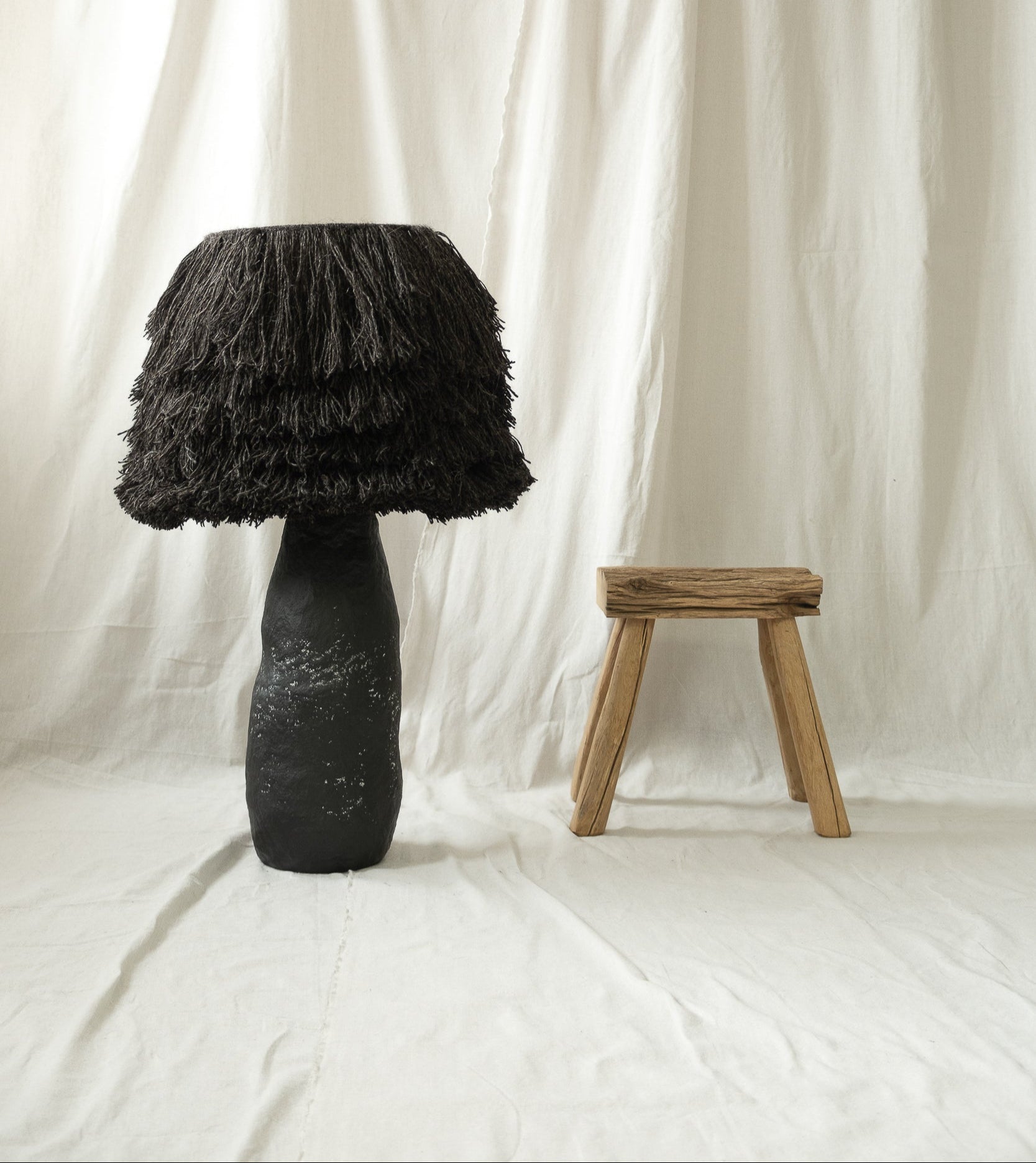
If we want to understand why collectible design and sculptural functional objects are transforming interiors in 2025, we have to look backward — not just at style, but at thought.
Every era of design has been shaped by a question.
Bauhaus asked:
“How do we unite art and function?”
Mid-century asked:
“How do we industrialize beauty?”
Postmodernism asked:
“Does an object need meaning?”
And today, a new generation of studios is asking:
“How do we create objects that feel alive, ethical, permanent, and emotionally human?”
That question has given birth to the modern movement of functional art, where objects are not just useful but expressive, sculptural, and materially truthful.
Bauhaus: The First Break in the Wall Between Art and Object
Before Bauhaus (1919–1933), art and furniture were seen as separate worlds: one sacred, one practical. Bauhaus changed that forever.
It did not elevate furniture to art — it merged them.
Key ideas we still use today:
form follows function
every object is a cultural artifact
design belongs in everyday life, not museums
material should be honest, not disguised
The irony?
What was once radical is now standard — but today’s movement wants more than function.
Post-Bauhaus: When Mass Production Became the Enemy
Mid-century design brought elegance and softness into mass production — but also created a problem: repetition without soul.
What was meant to democratize design eventually led to a world where 10 million people own the same table, chair, lamp, sideboard.
That is exactly the system functional art now rejects.
Postmodern and Conceptual Design: Meaning Over Use
The 1980s–2000s introduced a new idea:
“A chair does not have to be a chair.”
Memphis Milano, Droog, and Ron Arad blurred the line between sculpture and object — but the movement was often playful, not material-driven.
Today’s shift is different:
It is not about irony, but material intimacy, emotional gravity, and quiet power.
The 2025 Movement: Biomaterial Object Culture
The most important new force in functional art is material ethics — clay, wood, cellulose, stone powder, hemp fiber, raw wool, plaster, lime, natural pigment, charred surfaces.
Biomaterials do two things mass materials cannot:
they show the hand
they age beautifully
A biocomposite lamp will never crack like plastic glaze.
A sculptural table with raw edges will not lose value when scratched.
A burned wood column will remain itself for 100 years.
Objects are no longer designed to “stay perfect.”
They are designed to stay alive.
Why Biomaterial Design Feels Like the New Bauhaus
Because we are repeating the same cultural cycle — but with a deeper purpose.
Bauhaus: unite art and utility
2025: unite art, utility, and earth
The new question is no longer:
“How do we make function beautiful?”
but
“How do we make beauty responsible, tactile, permanent, and human?”
Examples in Today’s Market
PletoStudio — biocomposite sculptural lamps and furniture
Faina — earth-based, hand-textured wabi objects
Najla El Zein — emotional sculptural seating
Vincent Pochet — mineralized, stone-like forms
Arno Declercq — charred wood and bronze brutalism
Galerie Philia — platform for ethical sculptural design studios
These are not trends — they are philosophies with material proof.
What This Means for the Future of Interiors
The next wave of design history will not be defined by styles (“Japandi,” “Brutalism,” “Organic Modern”).
It will be defined by material worldview.
Industrial → Sustainable
Surface → Substance
Product → Presence
Object → Companion
Functional art is not the rejection of design.
It is the evolution of it.


