



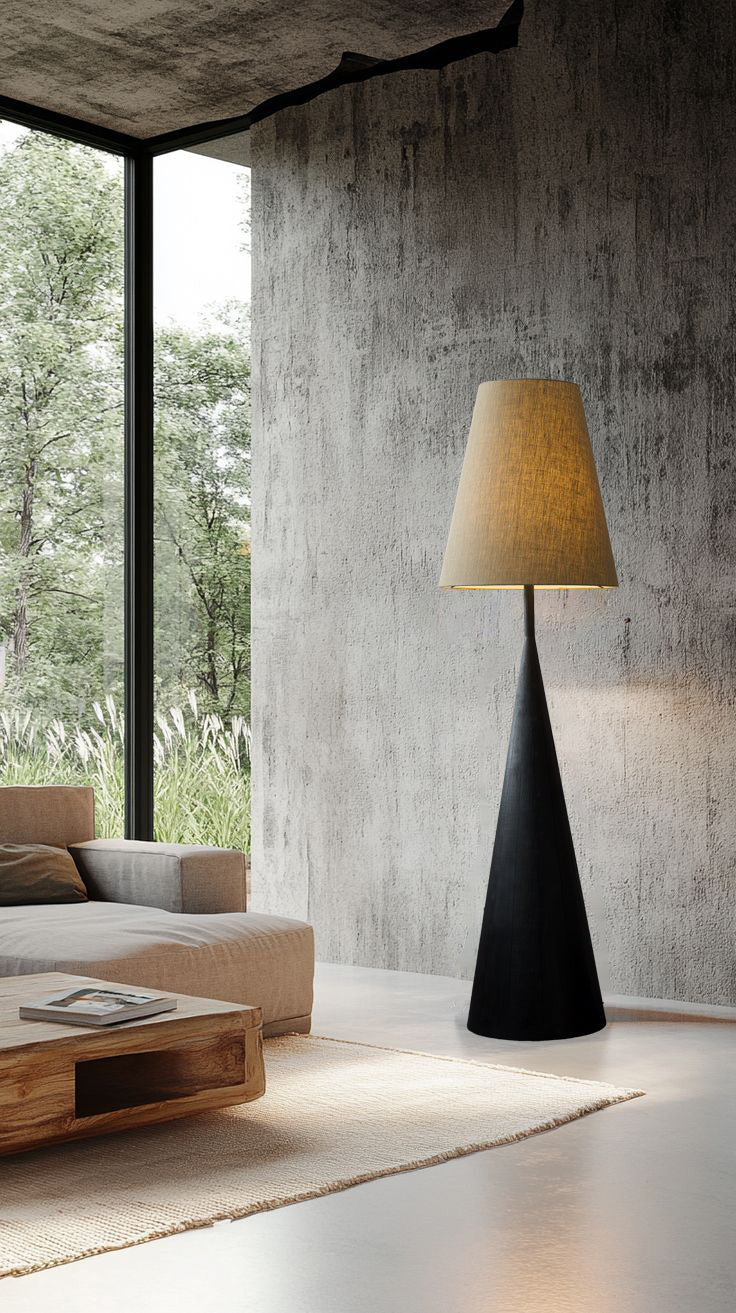
For most of modern design history, beauty was defined by refinement — smooth edges, flawless surfaces, repetition, symmetry, control. We associated luxury with perfection.
But the world is changing, and so is our eye.
The new wave of collectible design embraces a different value system — one where irregularity, tactility, and natural imperfection are not flaws, but sources of emotional depth and material honesty.
This is the influence of wabi-sabi — the Japanese worldview that honors the incomplete, the weathered, the handmade, the unpolished, the quietly poetic.
Wabi-sabi is no longer a Zen concept applied only to ceramics and tea houses. It is now shaping collectible furniture, sculptural lighting, gallery-style interiors, and the entire philosophy of luxury design.
Why Imperfection Feels More Luxurious Today
Because perfection has become industrial.
Because flawlessness can be mass-produced.
Because sameness feels cheaper than difference.
A table with a soft uneven edge tells a story.
A lamp with visible texture invites touch.
A sculptural base with cracks or mineral relief shows life, not factory polish.
The shift is not about rusticity.
It is about emotional truth over industrial finish.
How Wabi-Sabi Shows Up in Modern Design Objects
It appears in:
matte instead of gloss
clay instead of resin
wool bouclé instead of polyester textile
hand-formed curves instead of CNC precision
charred wood instead of lacquered veneer
biocomposite texture instead of fake stone print
mineral pigment instead of synthetic paint
Objects that feel like they evolved, not manufactured.
Why Collectors Gravitate Toward Imperfect Objects
Because they feel human.
A perfectly smooth object tells you nothing about the person who made it.
A textured, hand-built object carries the presence of the maker and the passage of time.
Collectors choose:
one-of-one over edition 500
alive surface over artificial finish
hand-built gesture over engineered symmetry
The emotional value rises as the industrial value decreases.
Wabi-Sabi and the Investment Logic of Future Design
The objects gaining value today are not the ones that look flawless when new — they are the ones that age into character.
A matte clay lamp will patina.
A hemp-fiber biocomposite base will develop soft tonal depth.
A charred wood column will shift in sheen as light touches it for years.
Plastic stays perfect — and dies.
Earth materials change — and live.
That is why the future of collectible design is not “Instagram-perfect.”
It is time-perfect.
Where This Aesthetic Is Rising Fastest
Design Miami and Collectible Brussels
Japanese and Scandinavian interiors merging into “quiet brutalism”
Los Angeles earth-material architecture studios
Brooklyn minimal-warm loft conversions
Parisian apartments with sculptural lighting + negative space
Mexico City concrete homes with organic furniture
Boutique hotels designed like private galleries
The spaces people remember today are not the brightest — they are the deepest.
The Imperfect Object as Emotional Anchor
A room does not need many objects — it needs one object that matters.
A lamp with a hand-textured base
A coffee table with an uneven organic silhouette
A mirror framed in wrapped textile or rough-edged wood
These objects don’t just fill space.
They create stillness, contrast, atmosphere, and memory.
Imperfection is not a trend.
It is a cure for visual exhaustion.
The Future of Luxury Is Not Clean — It Is Alive
Factory polish is predictable.
Handmade irregularity makes the eye slow down and feel.
Luxury is no longer about owning the rarest material.
Luxury is about owning the most human material.
The new collector, the new designer, the new homeowner — they do not want “perfect.”
They want presence.


