



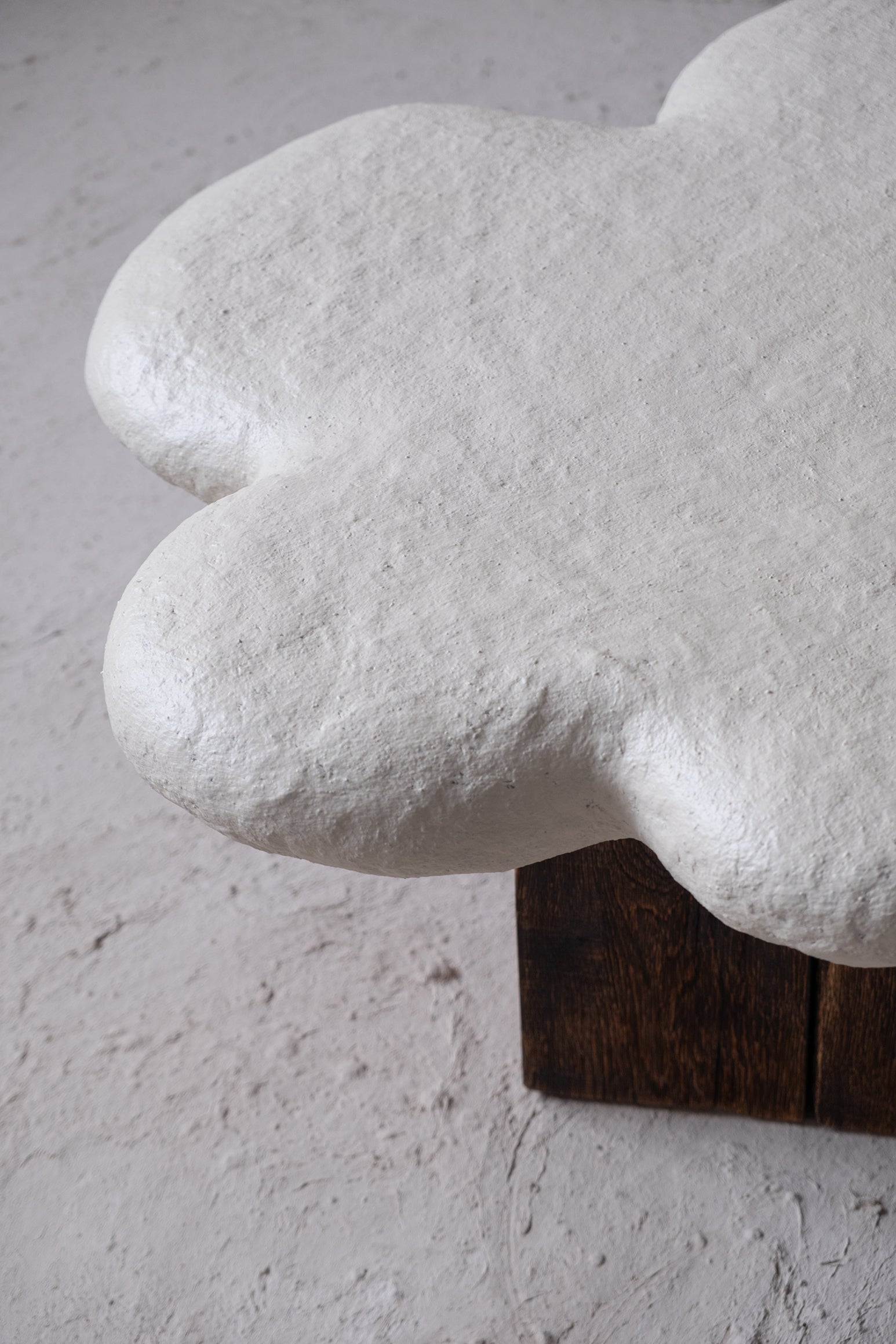
Organic modernism is not a trend — it is a return. A return to tactility, to honest materials, to forms that feel softened by time rather than shaped by machines. In a world growing louder, faster and more polished, organic modern homes feel like quiet sanctuaries. They invite exhale. They hold emotional weight. They reconnect us with what feels human.
In spaces inspired by Galerie Philia, Galerie Half or the sculptural depth seen in Carpenters Workshop Gallery, organic modernism reveals itself through form, not decoration. Raw textures, natural fibers, mineral surfaces, wool, wood and biocomposite become architectural elements. They create calm without sterility, warmth without clutter, sophistication without effort.
A sculptural floor lamp becomes one of the defining objects in these interiors. Its presence feels grounded and intuitive, as if it emerged from the material itself rather than being designed into existence. A wool lampshade diffuses light into soft atmospheric halos, filling the room with warmth. A biocomposite base, textured like stone or earth, brings an anchoring stillness. Charred wood introduces depth — a quiet echo of nature preserved in object form.
Organic modernism thrives on imperfection. Every irregularity is a signature, not a flaw. Every raw edge carries a story. In these spaces, emotional lighting replaces complex décor. One sculptural lamp can define the entire room — a solitary object that offers both texture and illumination.
The beauty of organic modern design lies in its longevity. These materials do not chase trends. They do not age out. They live, breathe and patinate with the home. Designers who embrace this philosophy understand that interiors should evolve slowly, with intention. Light should feel human. Objects should feel collected, not purchased.
Organic modern homes are not about minimalism or rusticity. They are about presence. About balance. About emotional clarity. They blur the line between nature and architecture, between sculpture and function, between object and atmosphere.
They remind us that a home is not a showroom — it is a place where we are meant to feel.


