



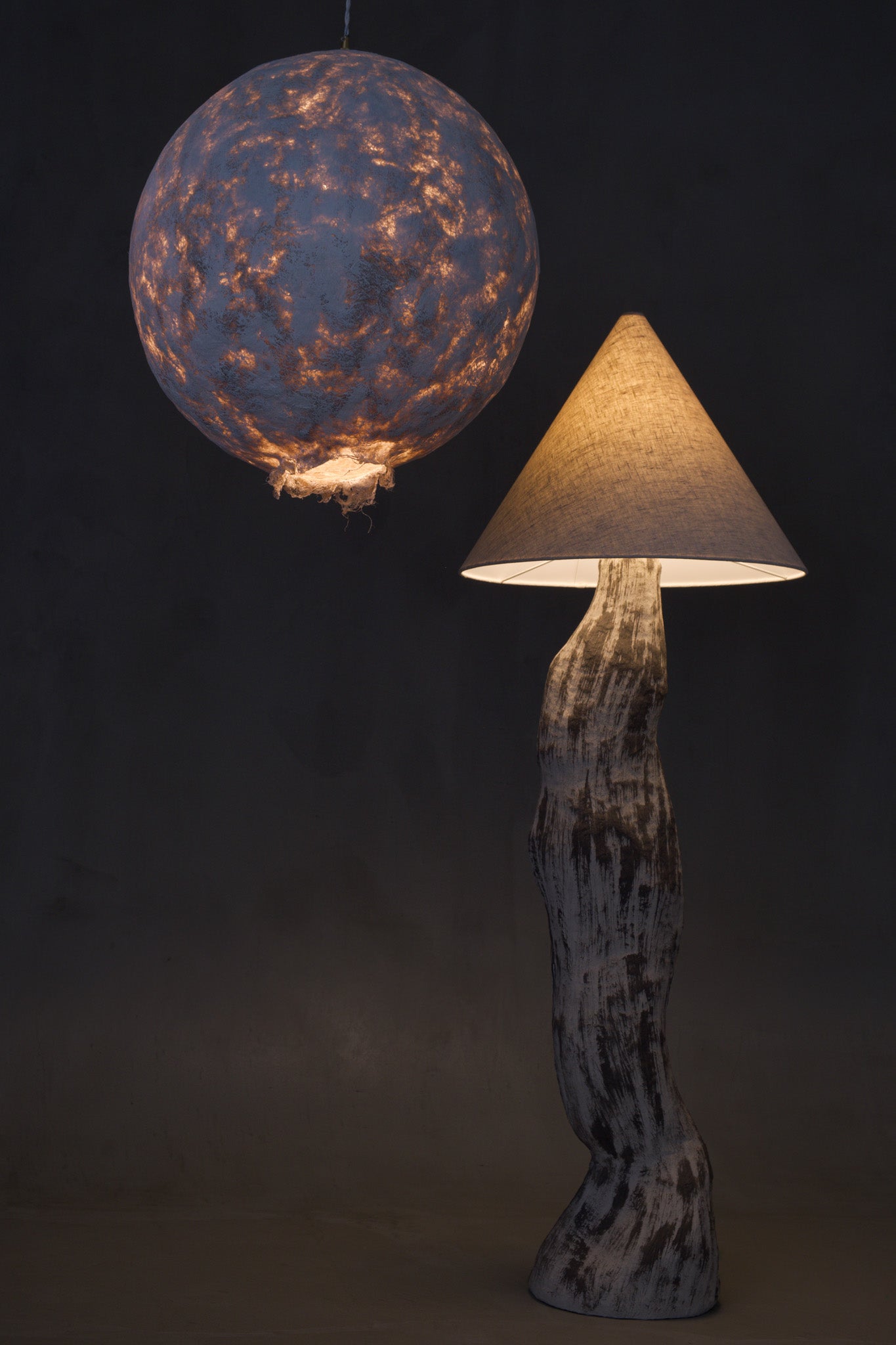
Slow design is not about the absence of speed — it is about the presence of intention. It is a philosophy that rejects urgency, excess and noise, and instead cultivates emotional clarity through space, texture and light. In a world overloaded with stimuli, slow interiors feel like a deep breath. They reconnect the mind with the room.
In contemporary design circles — from Galerie Philia to the restrained elegance of Galerie Half and the quietly expressive installations at Carpenters Workshop Gallery — slow design is becoming the foundation of high-end interiors. Not because it is a trend, but because it speaks directly to how people want to live: calmly, deliberately, with emotional purpose.
Slow interiors begin with light.
Not bright light. Not technical light.
But emotional lighting — the kind that changes the atmosphere rather than the visibility of a space.
A sculptural floor lamp made from natural materials embodies the essence of slow design. Wool diffuses light like a veil of softness. Biocomposite shades absorb glow with warm tactility. Charred wood bases introduce depth and grounding. Each material slows the eye, softens movement, and tempers architecture with subtle rhythm.
psychological research shows that environments with natural textures and warm, diffused light lower stress levels and improve a sense of presence. Emotional interiors are not built through color coordination — they are built through sensory harmony. Through the interplay of light and shadow, stillness and form, texture and openness.
Slow design also teaches us to choose fewer objects, but to choose them with meaning. A single collectible lamp can create a stronger emotional anchor than a room filled with decorative elements. Space becomes intentional. Silence becomes part of the composition. Absence becomes luxury.
In organic modern homes, slow design reveals itself in the way light touches surfaces, in the imperfections of sculpted materials, in the quiet dialogue between form and atmosphere. Instead of visual noise, there is visual poetry.
Slow design is not about living slowly.
It is about living consciously.
It is about creating interiors that don’t overwhelm — they hold you.
A sculptural lamp does not hurry the room.
It invites you to arrive.


