



In the past, art lived on walls. Paintings, framed works, sculpture placed safely on pedestals — all separate from daily life, all slightly distant. Today, something remarkable is happening across contemporary homes and curated interiors: lighting is becoming the new art.
Not lighting as a fixture, but lighting as sculpture. As presence. As emotional architecture.
In spaces shaped by Galerie Philia, Carpenters Workshop Gallery, Atelier Areti and other contemporary design houses, collectible lighting has moved from the margins into the center. It does what art has always done — holds attention, creates atmosphere, shapes meaning — but it also does something more intimate: it lives with you.
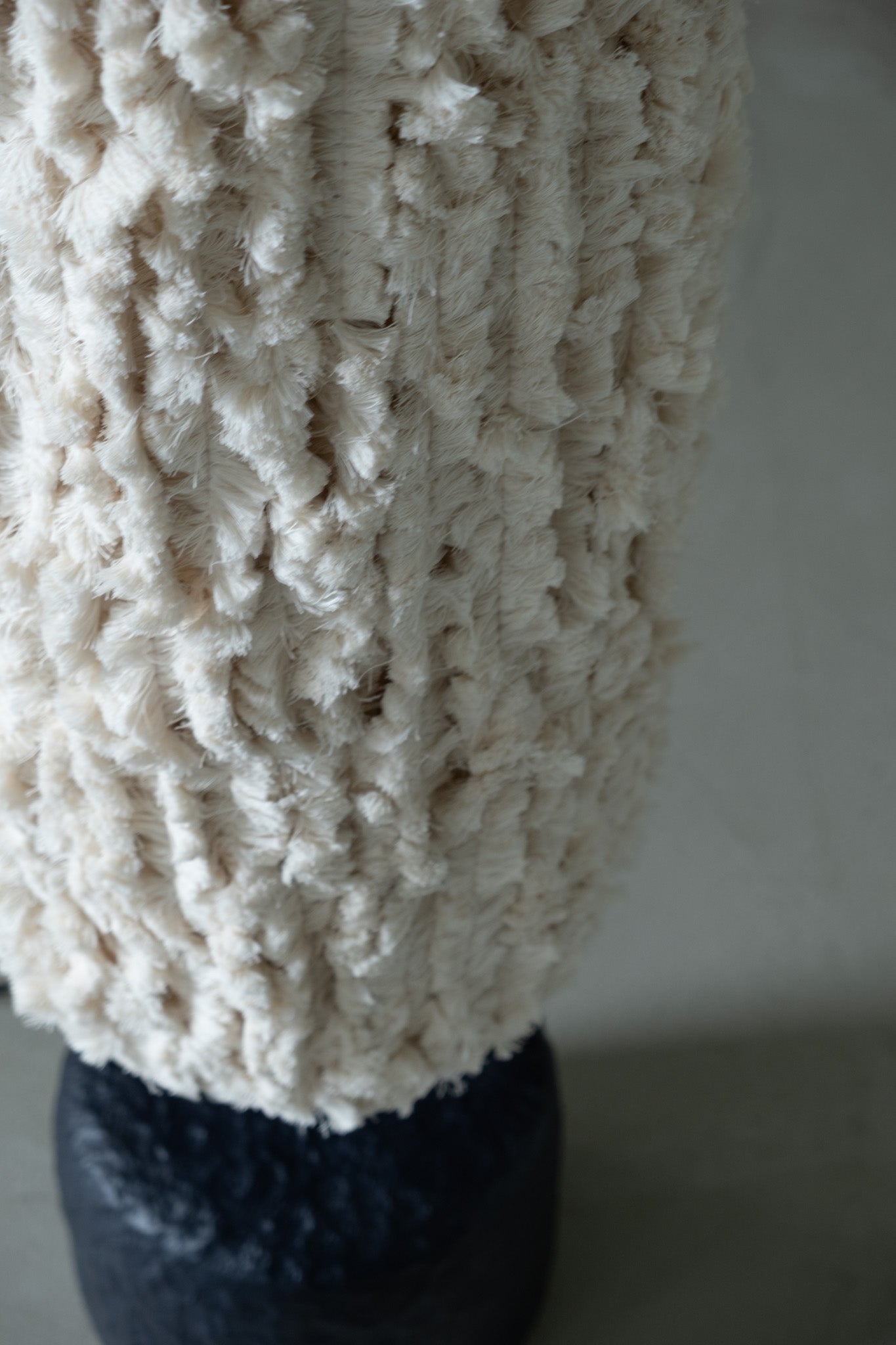
A sculptural floor lamp does not just stand in a room; it breathes with the room. Its silhouette becomes a visual anchor. Its texture — wool, biocomposite, charred wood, mineral fiber — becomes a sensorial experience. Its light becomes mood, rhythm, temperature. Unlike framed art, a sculptural lamp transforms as the day changes. Morning light softens its volume; evening shadows deepen its form. It is art in motion, art with purpose, art through atmosphere.
Designers understand this shift deeply. Many now choose a statement lamp before choosing the rest of the décor. Why?
Because a sculptural lamp defines the room. It creates the emotional baseline. It does what a painting cannot: it merges function with soul. It shapes how the room is lived in — not just how it is viewed.
Collectible lighting also carries a kind of timelessness that traditional art sometimes loses in large interiors. Where a painting might feel small, static or distant, a sculptural lamp holds its ground. It bridges scale. It fills vertical space with character. It introduces texture to minimalist architecture. It humanizes contemporary rooms designed with restraint and clarity.
In high-end homes, boutique hotels and restaurants with curated ambiance, lighting has become the centerpiece around which everything else is selected. The lamp becomes the story — an object that speaks softly but with depth. It is touched, approached, lived with. It brings intimacy to large volumes and sophistication to small ones.
Collectible lighting is not replacing art because it is more functional.
It is replacing art because it is more alive.
It changes with you.
It changes with the room.
It changes the room itself.
And in the end, that is the highest purpose of design.


