



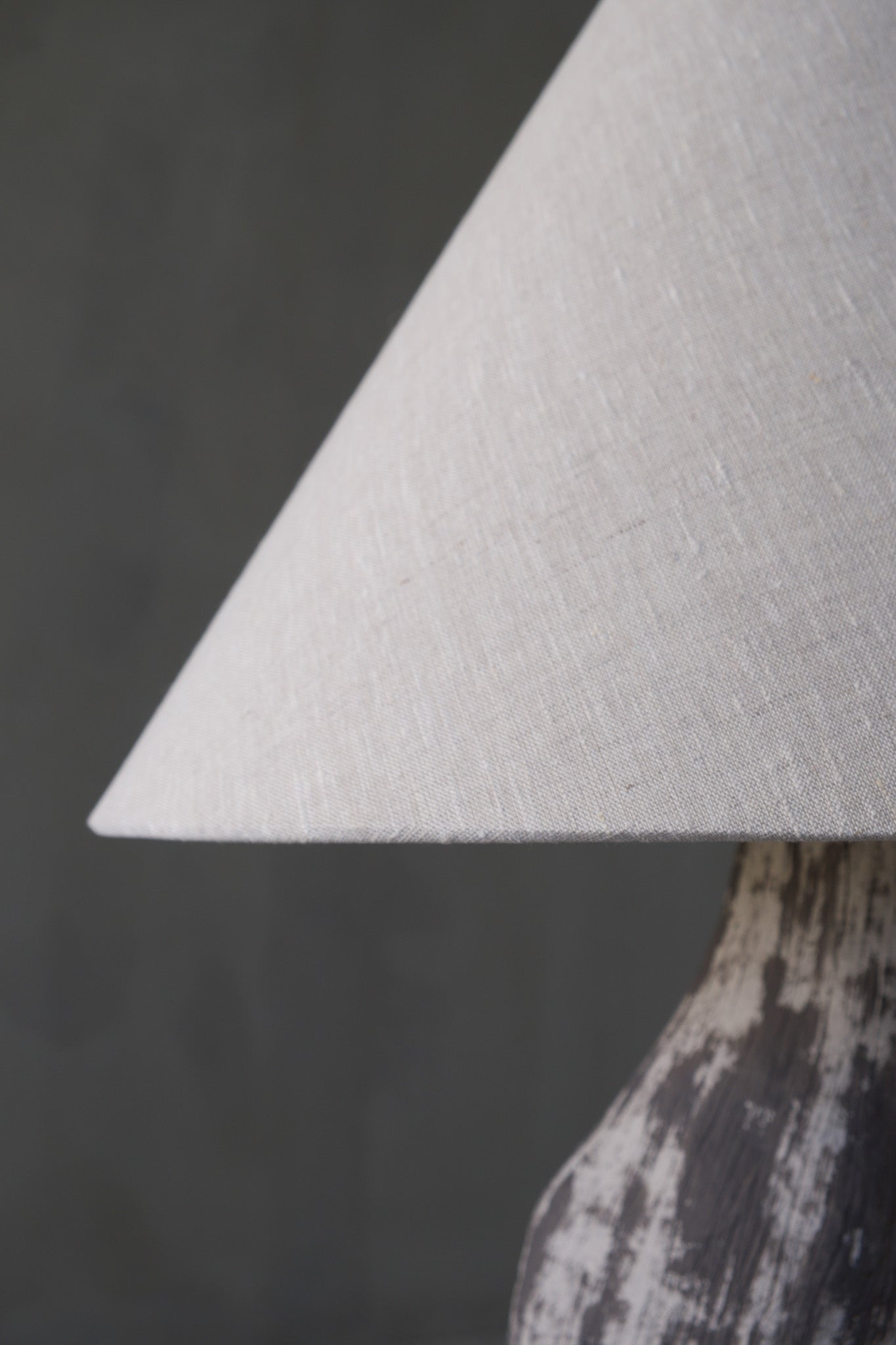
A few years ago, interior designers worked like this:
Pick a style
Select furniture sets
Choose lighting from a retail or trade catalog
Present a full room to the client
That workflow is gone.
In 2025, designers aren’t shopping for lamps — they’re commissioning them.
Because the lamp is no longer a fixture.
It is a center object, a statement, an emotional anchor, a piece of functional art.
And no catalog lamp — even a $6,000 one — can compete with a sculptural object made specifically for a space, in a material and scale that fits the architecture instead of the industry.
✅ Why Designers Prefer Commissioned Lighting Now
Because a catalog piece is predictable — but a commissioned piece is owned.
Studio-made lamps offer:
unique form, not repeatable design
material identity (clay, biocomposite, wood, wool, plaster, stone)
custom height, diameter, tone and shadow behavior
relationship with the maker (designers want story, not stock number)
emotional presence that elevates the whole room
photo value for press, portfolio, and client storytelling
Commissioning is not “extra.”
It is the new baseline for designers who want to stand out.
✅ What Designers Actually Request When Commissioning
Not “can you make this in beige?”
But:
Can you scale this lamp to 7 ft for an entry hall?
Can the base be matte instead of polished?
Can we match the shade texture to the wall plaster tone?
Can you create a warmer shadow, not direct light?
Can we get a certificate of authenticity for client records?
Can we do two similar pieces — not identical — for a double-height space?
Designers no longer want options.
They want control.
✅ Why This Is Financially Smart for Studios
Commissioned work = higher price point
No wholesale discount pressure
No retail overhead
Guaranteed sale before production
Direct relationship with designers (repeat business)
And the biggest benefit:
A commissioned lamp becomes a case study piece — the object that leads to 3 more sales from new clients.
One lamp placed in one architect-designed home → 100x more valuable than 10 lamps in retail inventory.
✅ Where Commission-Based Design Is Happening Most
Los Angeles (architect-led homes with sculptural lighting)
New York (collector apartments + minimalist penthouses)
Austin (earthy slow-material design movement)
Toronto (stone + clay interiors with textile lighting)
Paris & Brussels (gallery-style apartments, pedestal lighting)
Mexico City (concrete modernism + raw material lamps)
These are not “decorators.”
These are designers building spatial identity.
✅ Architect vs Interior Designer vs Collector — Who Commissions Lamps?
ARCHITECTS → “We need scale, form, and shadow that match the structure”
INTERIOR DESIGNERS → “We need emotional presence and visual weight”
COLLECTORS → “We want an editioned or one-of-one object with resale value”
In all 3 cases — the lamp is not purchased last.
It is specified first.
✅ Why Factory Lighting Can’t Compete Anymore
mass-produced → identical, trend-bound, surface-based
studio-made → authored, textural, slow, emotionally durable
Retail lighting fills rooms.
Commissioned lighting defines rooms.
That is why the future is not “designer brands.”
It is designer relationships.


