



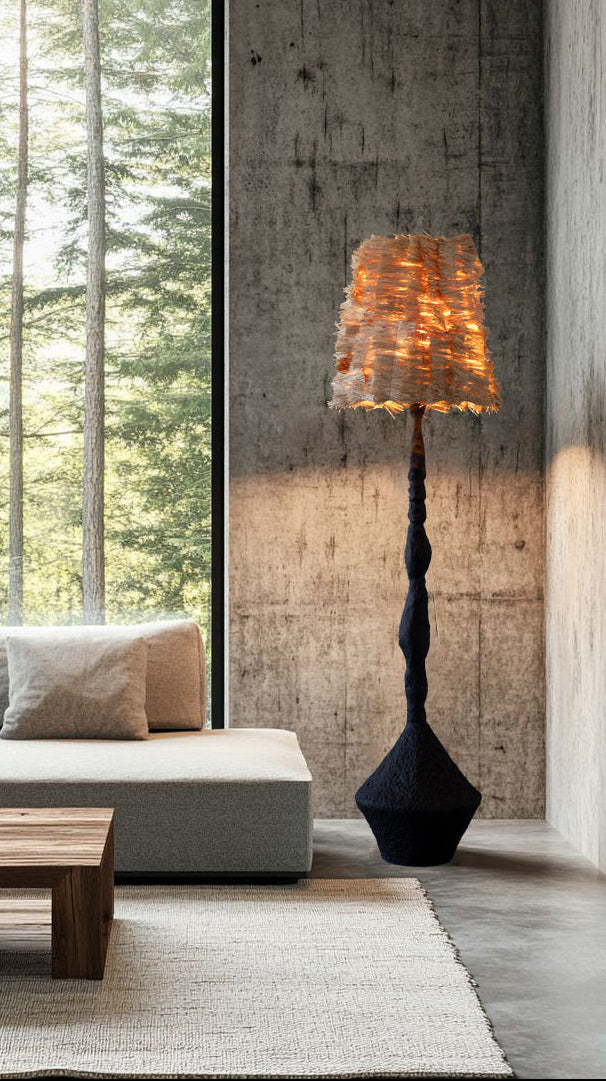
Great restaurants are not built on food alone. They are built on atmosphere — the feeling that surrounds a person before they taste anything, before they say a word. Lighting is the first emotion a guest experiences. It decides whether the space feels intimate or distant, warm or cold, memorable or forgettable.
In the world of contemporary hospitality design, especially spaces influenced by Galerie Philia, Carpenters Workshop Gallery or the curated restraint of modern boutique hotels, lighting has evolved from a functional necessity into a sculptural language. Restaurants today don’t simply “light” their interiors — they compose them.
A sculptural floor lamp can transform a dining area with surprising subtlety. Unlike ceiling fixtures that dominate from above, a floor lamp introduces intimacy at human height. It shapes the room through soft architecture rather than sheer brightness. Its presence divides space, creates visual rhythm and softens the movement between tables.
Texture is essential in hospitality lighting. Biocomposite bases, raw minerals, charred wood and wool shades absorb light in a way that feels warm and deeply human. These materials prevent harsh reflections and create a soft, diffused glow that flatters the space — and the guests. Warm, layered lighting makes people feel relaxed, confident, beautiful. It encourages longer stays, deeper conversations and emotional connection with the space.
Restaurants that want a “wow” effect often misunderstand what creates it. It is not brightness. Not spectacle. Not size. The wow-effect is emotional resonance — the feeling that the space has presence.
A single sculptural lamp placed in a strategic corner can become the visual anchor of the entire restaurant. It creates a pause in movement. A moment of calm. A point of focus that guests immediately recognize but cannot always articulate. This is the difference between lighting as décor and lighting as identity.
Designers within the organic modern and minimalist hospitality scene increasingly choose collectible lighting because it feels unique, not generic. It carries tactile depth. It brings organic imperfection to the polished surfaces of restaurants. It creates warm shadows, soft gradients and a sense of curated intimacy that chandeliers or track lighting cannot replicate.
Lighting in restaurants should not compete with the food or with the architecture.
It should elevate them.
It should serve as emotional choreography: guiding, shaping, embracing.
In the end, a restaurant becomes unforgettable not because it is bright, but because it feels alive.


